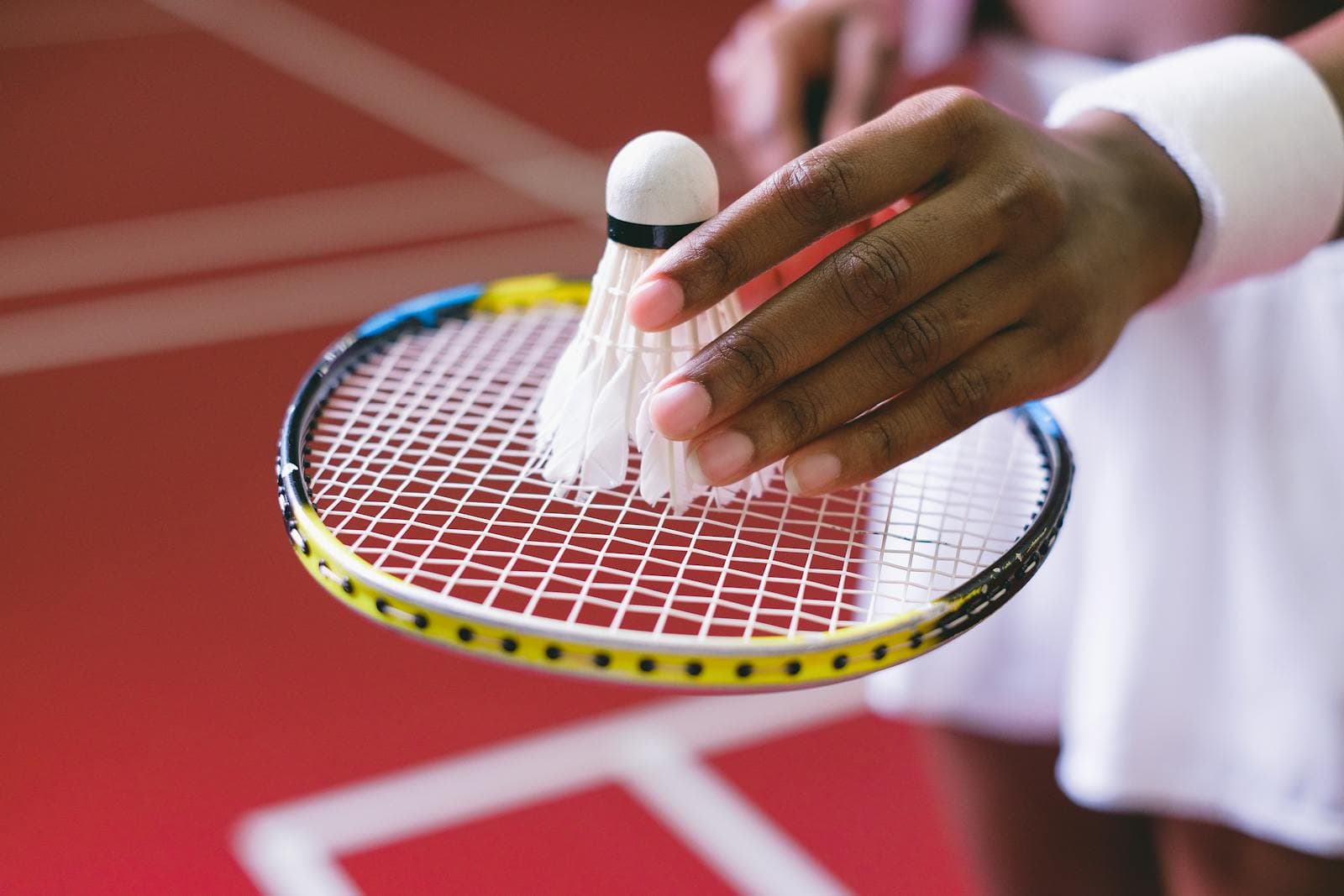
Watch a club doubles game and count how many rallies are effectively over by the third shot. Not the point, the rally. Someone serves, someone returns, someone plays the next ball, and from that moment one side is attacking and the other is digging for their life. The remaining eight shots are just the attacking side finishing, or fumbling the finish. The rally was decided before most players even felt it start.
I'm Imran Wadia, former Canada Men's Singles #1 and Thomas Cup team member. I played mostly singles, but I've spent the last decade reviewing doubles for adult players, because doubles is the format most clubs play most, and the serve and return is the part adult players understand worst. They drill smashes for an hour and serve like it's a formality to get the rally going. Then they lose the first three shots every rally and can't work out why the match felt so one-sided.
This is the guide to that opening exchange. The low serve and the standard you have to hold it to, the variations and when they're worth the risk, the receiver's four real options, and the positioning that quietly hands away points before anyone has hit a winner.
Why the first three shots decide most doubles rallies 
Doubles is a game about the shuttle's height. When the shuttle is above net height on your side, you can hit down, and hitting down in doubles wins points. When it's below net height, you have to lift or play it soft, and now the other side hits down at you. The whole game is a fight over who gets to hit down first.
The serve is the first move in that fight, and it's the one shot where you have total control. Nobody is rushing you. You place the shuttle exactly where you want, at the tempo you choose. That makes the serve the single most undervalued shot in club doubles, because it's the one chance per rally to dictate terms with zero pressure, and most players waste it.
A good low serve forces the receiver to take the shuttle below net height. They can't hit down. They have to lift, push, or play a delicate net shot, and every one of those replies gives the serving side a chance to take the attack. A bad serve, one that floats up even slightly, lets the receiver take it above the tape and drive or rush it straight back at your feet. Now you're the one defending, on your own serve, in a rally you opened with the advantage.
The third shot is what the serving side does with the reply. Get the serve and the third shot right and you're attacking from rally to rally without ever hitting a spectacular shot. That's what good doubles pairs actually look like up close. Not flashy. Just consistently on the right side of the shuttle's height by the third contact.
The low serve: the default and the standard it demands 
The low serve, sometimes called the short serve, is the default serve in doubles at every level above beginner. The shuttle skims the top of the net by the smallest margin you can manage and falls onto the front service line. Done right, the receiver has to come forward and take it below the tape, with no power available to them.
The technique is short and quiet. Most players in men's doubles use a backhand serve now: shuttle held in front of the body, racket behind it with a relaxed grip, and a tiny push from the fingers and forearm rather than a swing. The smaller the motion, the more repeatable it is, and repeatability is the entire point. You are not trying to do anything clever. You are trying to put the shuttle in the same two-inch window a hundred times in a row.
The standard is higher than club players think. The margin between a serve that skims the tape and a serve that sits up two inches is the margin between forcing a weak lift and getting your serve killed. There is no "good enough" low serve. A serve that's good enough four times out of five means every fifth rally you start on defense, and over a match that adds up to a game you didn't need to lose.
Watch how little moves in that clip. The serve is mostly stillness with a small push at the end. If your serve has a backswing, that's the first thing to cut.
Serve variations: the flick, the drive, and reading when to use them 
The low serve is the default, but a serve that's only ever low becomes readable. A receiver who knows the low serve is coming every time starts creeping forward, taking it earlier and higher, and rushing your third shot. That's when the variations earn their place. They exist to punish a receiver who's cheating forward, not to be hit for their own sake.
The flick serve. A low serve action that, at the last instant, becomes a fast flat lift over the receiver's racket to the back of the service box. The preparation has to look identical to your low serve right up to contact, or it gives itself away and the receiver simply steps back and smashes it. Used well, against a receiver leaning in, the flick catches them moving the wrong way and forces a weak reply from the back. Used badly, telegraphed or floated, it's the easiest point you'll ever give away.
The drive serve. A flat, fast serve aimed at the receiver's body or dominant shoulder, meant to surprise. It's a low-percentage shot and a one-time weapon. It works once a game against a receiver who's gone to sleep, and the second time they're ready and they punish it. Treat it as a rare disruption, not a tactic.
The read that governs all of this is the receiver's weight. If they're standing tall and leaning forward, the back of the box is open and the flick is on. If they're settled back and patient, the low serve to the front is the safe, correct choice and the variations are just risk for its own sake. You're not choosing a serve from a menu. You're answering where the receiver has left themselves vulnerable.
The receiver's job: stance, grip, and attacking the serve 
Switch sides. You're receiving now, and your goal flips. The server wants you below the tape. You want to take that shuttle as early and as high as you possibly can, because every inch higher you make contact is an inch more pressure you put back on them.
The stance is aggressive and forward. Racket foot in front, weight on the toes, body leaning in toward the net, racket already up and out in front of you at net height. You are coiled to spring forward, not waiting to react. A receiver standing flat with the racket down has already given the server a free low serve, because by the time they move, the shuttle is below the tape.
The grip is up and ready, racket head high. The single most common receiving fault I see is the racket starting low, around the waist, so the player has to lift it before they can play the shuttle. That half-second of lifting the racket is the whole difference. Start with the racket up, head above the net, and you can meet the serve early and play down or flat instead of being forced into a lift.
The mindset matters as much as the mechanics. Receive like you intend to attack the serve, and the server feels it. They tighten, their margin shrinks, and the serves that used to skim the tape start catching the net or sitting up. A passive receiver makes serving easy. An aggressive one makes the server's two-inch window feel like a keyhole.
Returning the low serve: four options and when to pick each 
Assume a good low serve has forced you to come forward and take the shuttle just below the tape. You have four real returns, and choosing the right one is mostly about where the servers are weak and how much risk the score allows.
The net return. A tight shot that drops back over the net into the forecourt. It's the safe, neutral return that forces the serving side to lift, handing the attack to you if they do. Use it as your default when you're not sure. The risk is playing it too loose and giving the server's partner an easy net kill.
The push. A flat, firm shot driven to the midcourt, usually at the server's partner or into the gap between the two servers. It's the most aggressive percentage return, meant to catch the serving side before they've set their formation. Use it when you've taken the shuttle high enough to play it flat. This is the return that wins club doubles matches, and it's the one most players never develop.
The drive. A faster, flatter version of the push, hit hard at a body or a gap. Higher risk, higher reward. Use it when you've read a serve early and can take it well above the tape. Miss the read and you're driving into a net you can't clear.
The lift. A return to the back of the court, conceding the attack to the serving side on purpose. It's the defensive option, and most club players' default, which is exactly the problem. Lifting off the serve hands the other pair the first attack in a game built around attacking first. There are times for it, when the serve was good enough that the other three options are off, but if the lift is your automatic answer, you're losing the opening exchange every rally by choice.
Notice the theme across those returns: the good ones keep the shuttle flat or down. The lift is the one that gives the attack away, and it's the one club players reach for first.
The third shot: what the serving side does after the return 
You served, the receiver returned, and now it's the third shot, your partner or you playing the first ball of the actual rally. This is where a good serve pays off or a mediocre one comes due.
If your serve was tight and the return was a lift, the third shot is the gift: you attack. The back player steps in and hits down, and you're into the attacking formation the doubles attack rotation is built around. The serve did its job and handed you the shuttle above net height.
If the return was a net shot, the third shot is a contest for the net. Whoever takes that next shuttle higher controls the rally, so the serving side's front player has to be alert and forward, ready to meet the return early and play it down or tight rather than letting it drop and being forced to lift.
If the return was a push or a drive at your feet, the third shot is a reflex block or a fast drive back, and the serving side is now neutral at best, defending at worst. This is the cost of a serve that sat up. You opened with the advantage and lost it in two shots.
The pattern to internalize: the serve and the third shot are a single unit, not two separate shots. You don't just serve and see what happens. You serve with a plan for the most likely return and where your third shot goes. Good pairs are already moving for the third shot as the return crosses the net, because they served knowing what they were inviting.
Serve-receive positioning for all four players 
The serve and return aren't just two players. All four have a job in the opening exchange, and the two partners standing behind the action leak more points than anyone realizes.
The server. After serving, you are immediately a net player. The low serve was played from the front, so stay forward, racket up, ready for the net reply. The mistake is serving and then drifting backward out of habit, which leaves the whole forecourt open for the receiver's net return.
The server's partner. You stand behind the server, covering the back and the flat drives. Your job is to read the return and take anything pushed or driven flat past the server. A good server's partner kills a lot of pushes that the receiver expected to get through. A passive one lets them through and the rally tilts.
The receiver. Covered above: forward, aggressive, racket up.
The receiver's partner. You stand behind and to the side of the receiver, and your job is to cover the back in case of a flick serve and to take the rally up if your partner's return forces a weak reply. The most common fault here is standing flat and watching your partner receive, then being late to everything that follows. The serve-receive geometry, and the way it shifts in mixed, gets a fuller treatment in the mixed doubles guide, but the principle holds across formats: the partner who isn't hitting still has a job, and doing it late costs the same as not doing it.
If your footwork into the serve-receive position feels slow or cramped, that's usually a base-position and split-step problem, not a tactics problem, and the doubles footwork guide covers how to set up and move from the serve-receive stance.
The opening exchange is invisible from inside the rally 
Here's the problem with everything I've just described. The serve, the return, and the third shot happen in under two seconds, and during those two seconds you're inside the rally, reacting, not observing. You cannot tell, in the moment, that your serve sat up half an inch, or that you lifted off a serve you could have pushed, or that your partner was a half-step late covering the flick. It all feels normal because it's happening at the speed the rally happens.
Then the rally ends ten shots later with a smash into the open court, and you remember the smash. You blame the smash. The smash wasn't the problem. The problem was the lift you played off the serve eight shots earlier that put your side on defense for the entire rally, and you have no memory of it, because it felt like nothing at the time.
A guide gets you the options. It can't show you which one you keep getting wrong, because that part is invisible to the person doing it. When I put a pair's match on the screen and slow the serve-and-return down, there's almost always a leak sitting right there that neither of them knew about: a serve that drifts up under pressure, a partner who freezes on the flick, a push that was on every rally and never got played. The fix is usually obvious once it's paused and pointed at. Finding it isn't. The opening exchange is where the gap between what you think happened and what happened is widest, and it's the cheapest two seconds in the match to fix once you can finally see them.