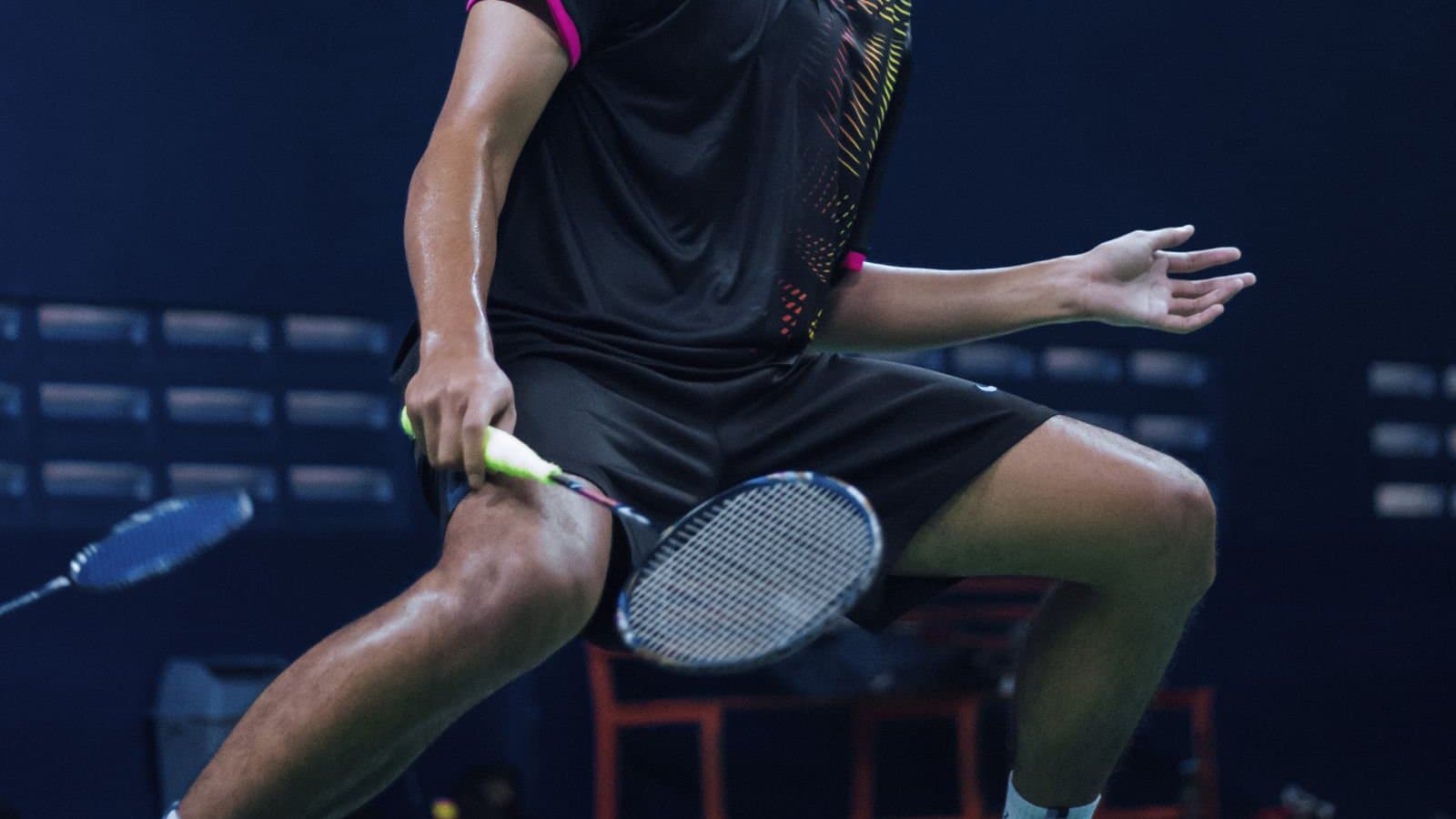
Four rallies in a row, the shuttle comes to you. The smash, the drive, the drop that follows the smash. Your partner hasn't touched it since 6-5. Somewhere around the fifth rally a thought arrives and doesn't leave: they've decided I'm the weak one.
Sometimes that's true. Often it isn't, or it's true in a much narrower way than it feels. Doubles pairs pick a target for several reasons, and only one of them is that you're the worse player. The others are about where you stand and what you do after a mistake, and those are cheaper to fix than your backhand.
I'm Imran Wadia, former Canada Men's Singles #1 and Thomas Cup team member. I've spent more of my coaching career on doubles than singles, and "they keep hitting to me" is one of the most common things adult players say when they send in footage. When we watch it back, the targeting is real less often than they think. When it is real, the reason is usually not the one they assumed.
Justin wrote the other side of this, how to beat a pair where one player is much better than the other, from the attacking pair's point of view. This is the view from the player standing in the crosshairs.
First, check it's actually you 
Being targeted feels obvious from the inside. It's one of the least reliable feelings in doubles.
Part of it is memory. You remember every shot that came to you because you had to deal with it, and you barely register the ones your partner played. Part of it is geometry. In side-by-side defence, a straight smash goes to whoever is standing on that side. If the opponents' best smasher keeps attacking from their forehand corner, the player opposite him gets most of the straight smashes, and that has nothing to do with skill. It's who happens to be standing in line.
So count before you conclude. Film a game, or ask a friend courtside to tally for one game: every shot the other pair hits, whose side did it go to? A fair split between two players in level doubles sits somewhere around 50-50, with natural swings either way. If it's 55-45, nobody is targeting you. If it's 65-35 or worse over a full game, something is going on.
Mixed doubles needs its own caveat, because the count means something different there. The front player in mixed takes a large share of the shuttles by design. Pushes, net shots and blocks all arrive at the front, so a 65-35 split toward the front player can just be the formation working. In mixed, the question isn't how many shots came to you. It's whether the ones you lost came from the same place. If you're at the front and the opponents keep winning with flat pushes past your shoulder, that's targeting. If you're simply touching the shuttle a lot, that's the job.
Then look at which shots make up the extra. Targeting is rarely "everything goes to you." It's usually one kind of shot, or one moment in the rally. That detail is what tells you why.
Three reasons a pair picks you 
From the inside these all feel the same: the shuttle keeps arriving. They have different causes and need different fixes, and treating the wrong one wastes a month.
A stroke hole. They found one shot you don't handle well. The rear backhand, defence at the body, soft hands at the net. Justin's post lists the four holes attacking pairs usually look for, and if you read it from the other side, it's an uncomfortable checklist. This is the only one of the three that's genuinely about skill, and even then it's about one skill.
A positional habit. Your strokes are fine, but you stand somewhere that makes certain shots free. You defend a step too deep, so every drop to your side lands untouched. You drift toward the middle to help your partner, so your tramline is permanently open. You're the one who rotates late after a lift, so there's a gap in front of you for a beat longer than in front of your partner. The opponents aren't thinking about who's weaker. They're thinking "that's open," and it happens to be open on your side.
A tell after errors. This one surprises people. Club players target whoever missed last. It's not even a strategy, more a reflex: you put a drive in the net, and the next shot comes to you to see if it happens again. If your body language after a mistake gives away that you're rattled (shoulders down, a shake of the head, racket dropped to your side while you walk back), the reflex gets reinforced. One error becomes three shots in a row at you, and the second and third ones are where the real damage is.
Most targeted players have one of these. Some have two. Almost all of them assume it's the first.
How to tell which one it is 
You can separate the three with a single viewing of one game, as long as you know what to look for.
If it's the same shot every time, it's a stroke hole. The rear backhand keeps getting tested. The body drive keeps coming. The shots vary in where they come from but they ask you the same question.
If the shots vary but keep landing in the same space, it's position. Drops, pushes and half-smashes all ending up in the same patch of court in front of you or beside you. They aren't attacking a stroke. They're attacking a gap, and you're standing next to it.
If the targeting comes in clusters right after your mistakes, it's a tell. Look at the three shots after each of your errors and compare them to the three shots after each of your partner's errors. If yours get followed up and your partner's don't, the opponents are reading you, not your technique.
This is also where your partner is more useful than you are. The player at the back sees the whole court, including you. One sentence between points ("they keep dropping in front of you") is often enough to separate position from stroke, and you'd never see it yourself because you're the one standing in the gap.
Make the target expensive 
A pair keeps hitting to you as long as it's winning them rallies cheaply. They stop when it starts costing them. You don't need to win spectacularly off their target shot. You need to make them hit a second and third good shot to finish what one used to finish.
That means one reliable reply to the shot they keep sending you, something you could play at 70% with your eyes half shut. This is the wrong week to build a new weapon.
If it's the body drive, the reply is a short, firm block or push into the front court rather than trying to drive back harder. If it's the smash to your side in defence, the block, drive and lift choices against a smash all work, but pick the one you're most reliable at and play it every time until they stop. If it's the deep lift to your backhand corner, a high, straight reply that resets the rally beats a rushed attacking attempt you'll miss one time in three.
The point is predictability on your side, deliberately. Opponents are watching to see whether the target still pays. If the same safe reply comes back four times in a row and the rally keeps going, most club pairs go looking for something easier within a game.
Take the first look away from them 
Pairs target hardest at the start of the rally, because that's when they know exactly where you are. When you're receiving serve, you're alone in the service box with your partner behind you, and every opponent in the building knows it.
So your return of serve is the one shot in doubles you can prepare in full. You know it's coming, you know roughly what it'll be, and you can decide in advance what you'll do with each option. Players who feel targeted usually treat the return as a reaction. Treat it as a plan instead: one return you play off the low serve to the T, one off the low serve wide, and a decision about the flick before the server's racket moves.
Same with your own serve. A loose serve gives them a free first attack, and if they've decided you're the target, the free attack goes straight back at you or your partner from a better position than they'd otherwise get. Tight serves don't stop targeting. They stop it starting on the first shot. If you want the serving pair's side of what happens next, the third-shot guide covers how the server and partner set up for it.
Cut your exposure with your own positioning 
This is about your feet only. Telling your partner to cover more of the court for you is a different conversation, and a worse one.
If the diagnosis came back as position, the fixes are small and specific. If drops are landing in front of you in defence, stand a half-step further forward. You'll give up a little against the smash and gain a lot against everything soft. If they keep finding your tramline, stop drifting toward the middle to help. Your partner is in charge of the middle, and helping only opens your side. If you're late into position after a lift, the problem is usually that you watched your own lift. Move as soon as you've hit it.
Keep your racket in front and up in defence. A racket hanging at your hip is a tell all by itself. It tells the attacker anything at your body will be late.
One thing not to do: cover more than your half to protect yourself. It feels like doing something. It opens the court, and a pair that's already targeting you now has a target and a gap.
The panic responses that make it worse 
Being targeted is uncomfortable, and the instinctive responses to it all make the targeting more effective.
The most common one is overhitting to prove a point. You get the shuttle three times in a row, and on the fourth you go for the winner, usually off a shot where a winner was never on. That error is exactly what the opponents were fishing for, and it buys the plan another five points.
The quieter one is lifting earlier. Under pressure you start lifting shuttles you'd normally push or block, and every lift is another invitation to smash at you. You end up feeding the targeting yourself.
Then there's the apologizing. A sorry to your partner after every error, a slower walk back, a look at the ceiling. I understand the impulse, and the opponents read every bit of it as confirmation. Reset the way you would after any error and keep it private. Your partner already knows you missed.
What a camera sees that you can't 
The hardest part of being targeted is that you're the worst-placed person on court to understand it. You can feel the shuttle arriving. You can't see the space around you, your own posture after an error, or the moment the opposing pair decided you were the one. Your partner sees some of it. The opponents see all of it. You see the shuttle.
One filmed game, watched once from behind the court, usually answers the question that hours of playing can't. Is it the same shot each time, the same space, or the same moment after your mistakes? Put the camera high and behind the baseline so both your feet and your partner's are in frame.
Most players I've worked with on this expected to hear their backhand was the problem. Sometimes it was. More often they'd been standing a step too deep for years, or shaking their head after every error, and the opponents had simply noticed first. That's an easier thing to fix than a stroke, once someone shows you it's there.