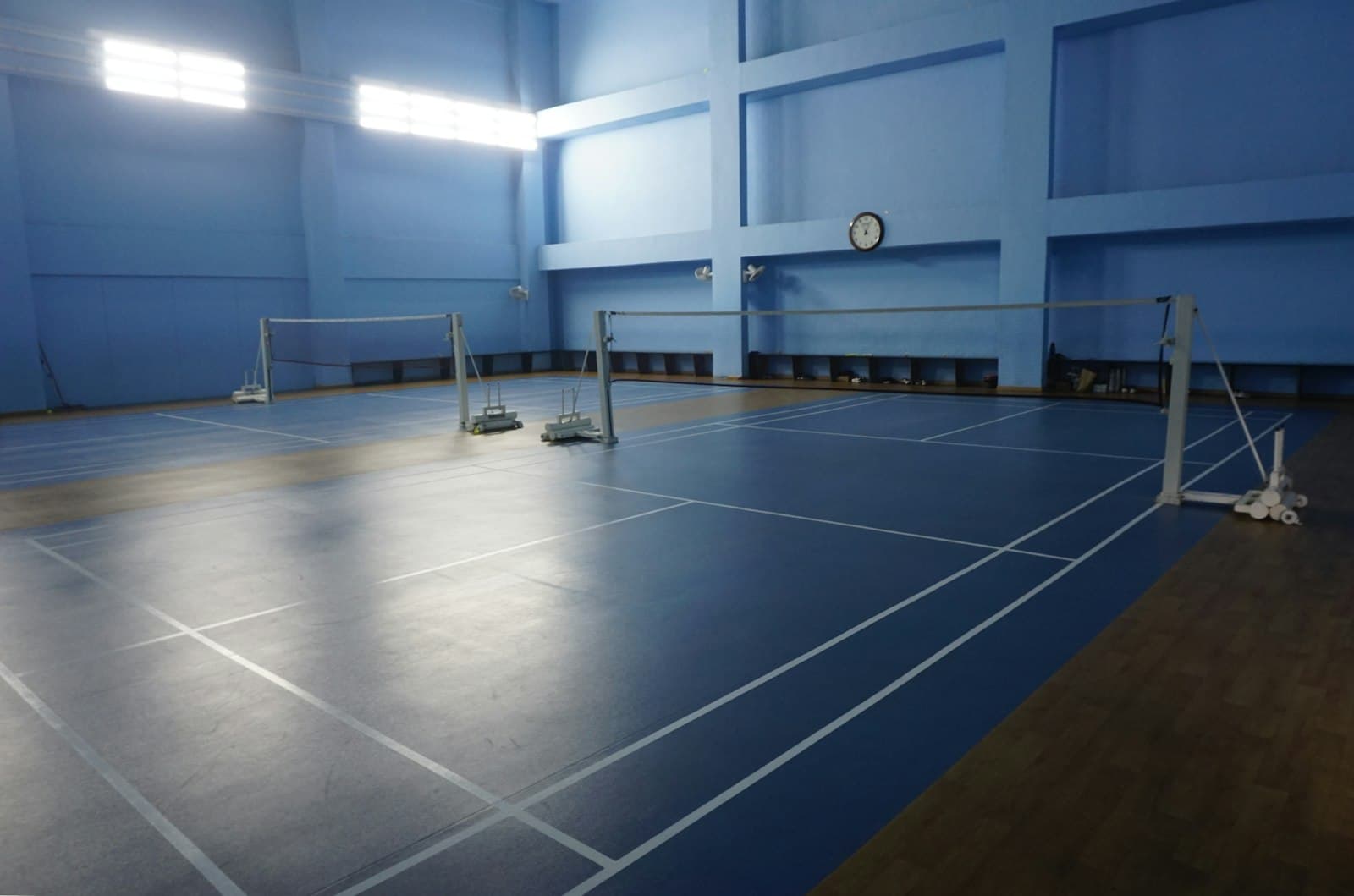
You practiced all week, your length was perfect on Tuesday, and now you've walked into a hall you've never played and from the first knock-up your clears are sailing a foot long off one end and dying short off the other. Same swing. Same shuttle. Different result. By the time you've half worked out what's going on, you're 11-5 down in the first and telling yourself you're playing badly. You're not. The hall is beating you, and you haven't adjusted to it.
This is the part of badminton that gets almost no coaching and decides a surprising number of matches, especially away from home. Every hall plays differently, and the better player isn't always the one who wins. The player who reads the conditions first and adjusts is.
I'm Imran Wadia, former Canada Men's Singles #1 and Thomas Cup team member. Touring badminton means playing in a different hall almost every week, some of them awful, and you learn fast that a venue you can't adapt to will lose you matches against people you'd beat at home. Together with Justin Ma (7× US National Champion) and Kevin Barkman (former Canada MS #1), I've reviewed thousands of clips inside Shuttle Lab, and a real chunk of the "I don't know what happened, I just felt off" losses are players who never adjusted to the hall they were standing in.
This is the field guide to that: why an unfamiliar hall changes your game before the first rally, how to read drift in the knock-up, how to adjust your length to it, what to do when the shuttle's too fast or too slow, the footwork the floor and the air force on you, and a three-minute routine to diagnose any venue before the match starts.
Why an unfamiliar hall changes your game before the first point 
Your length is a trained habit. You've hit ten thousand clears in your home hall, and your arm knows exactly how hard to swing to put the shuttle on the back line. That calibration is built for one set of conditions, and the moment the conditions change, the calibration is wrong and you don't feel it happening.
The thing changing the conditions is usually air movement. Big halls have air conditioning, open doors, vents, and the simple physics of hot air meeting cold, and all of it pushes the shuttle around in flight. That's drift. A shuttle is light and feathered and catches the smallest current, so a draft you can't even feel on your skin will move the shuttle a foot off its line over the length of the court. Ceiling height, temperature, and altitude change how fast the shuttle flies on top of that.
None of this touches your strokes. Your technique is fine. What's wrong is the calibration between your swing and the result, and because that calibration is unconscious, you experience a hall problem as a personal slump. You think you're hitting badly. You're hitting exactly as you always do into conditions that need something different.
Reading the drift in the knock-up 
The knock-up is not a warm-up. It's your one chance to scout the hall before it costs you points, and most players waste it hitting comfortable mid-court shots that tell them nothing.
Drift comes in two flavours and you need to identify which you've got. Side-to-side drift pushes the shuttle across the court, left or right, and it's worst on the outside and corner courts near walls, doors, and vents. End-to-end drift is the more common and more punishing one: the air moves down the length of the hall, so one end plays "fast" (the drift carries the shuttle deep, and your clears and lifts sail long) and the other plays "slow" (the drift holds the shuttle up, and the same clears fall short).
To find it, hit high. In the knock-up, play a series of high clears and lifts to the back on both halves of the court and watch where they land. Comfortable flat exchanges hide the drift. High shots expose it, because the longer the shuttle is in the air, the more the air does to it. Clear to one back corner, then the other, then switch ends and do it again. Within a dozen shots you'll see it: the shuttle drifting toward one sideline, or going long off one end and short off the other. Now you know what you're dealing with before the umpire's called the score.
Adjusting your length to the drift 
Once you know which way the air is moving, the adjustment is simple to state and takes real discipline to actually do under pressure.
When you hit with the drift, the air adds distance, so you take distance off. Your clears and lifts toward the fast end need to be shorter and flatter, because a full-power clear that's perfect at home will sail past the back line here. Your drops and net shots played with the drift run long and tend to sit up, so you play them tighter and more carefully, or you don't play them at all and pick a safer shot.
When you hit against the drift, the air eats your length, so you add to it. Clears need to be fuller and higher or they drop short into the middle where they get attacked. The upside is that your tight shots get tighter: a drop played against the drift holds up and dies near the net, and net shots are safer because the air pulls them back rather than floating them over. So the same drift that's a liability hitting one way is a weapon hitting the other.
The single biggest mistake is hitting your normal length and trusting it. You have to consciously override a trained habit for the whole match, and the moment you stop thinking about it, your arm reverts to its home-hall calibration and you hand over a cheap point. Good players talk to themselves about it between rallies, every time they change ends, until the adjustment becomes the new normal for that hall.
Fast halls, slow halls, and the shuttle-speed argument 
Separate from drift, the whole hall plays fast or slow, and it changes how the shuttle behaves for both players. Cold, dense, low-altitude air slows the shuttle down. Warm, thin, high-altitude, high-ceilinged halls let it fly, so the same smash arrives quicker and your clears go further. A hall that plays fast rewards flat, attacking badminton and punishes lazy clears that fly out. A slow hall with dead air and a high ceiling makes the shuttle float and hang, rallies get longer, and you have to work harder for a winner because everything comes back.
This is where players waste enormous energy arguing about the shuttle speed. The shuttles are matched to the hall by tipping the feathers faster or slower so they fly the correct distance, and yes, sometimes the speed is genuinely off. But the shuttle is the same for both of you, and a player who spends the match irritated that the shuttle's too slow has handed their opponent a free edge. Test it, agree it, and adapt. The conditions are not a grievance to win, they're a problem to solve faster than the person across the net.
If the shuttle is flying long for everyone, the whole match shifts toward control and flatter hitting. If it's dying short and floating, it shifts toward patience and constructing the point, the same way the four-corner game wins slow, grinding rallies. The hall is telling you which style it wants. Listen to it instead of forcing the game you brought.
Footwork when the floor is slippery or the air is dead 
The hall doesn't just change the shuttle, it changes the ground under you. A dusty, slippery, or freshly polished floor takes away the thing your footwork depends on, which is being able to push hard off the floor and trust it to grip. On a bad floor your usual lunge becomes a small skid, and the first time you find that out is usually mid-rally on a wide shot you don't reach.
The adjustment is to take a little off. Shorten your steps slightly, stay a touch more upright and balanced, and don't commit your full weight into a push you're not sure the floor will return. You give up a fraction of reach in exchange for not going down or sliding past the shuttle. A quick scuff of your shoes for grip, or a clean of the soles, helps, and on a genuinely dangerous floor it's worth checking whether the corners are worse than the middle. The clean, balanced movement fundamentals matter more on a bad floor, not less, because there's no margin for the lazy half-recovery you'd get away with on good grip.
Dead, slow air changes your movement too, just less obviously. When the shuttle hangs longer, you have marginally more time, and the temptation is to drift and watch it. Resist that. The extra hang time is for getting fully behind the shuttle and balanced, not for relaxing, because in a slow hall the rally won't end on one shot and you need to be ready to keep going.
A three-minute routine to read any hall before the first point 
You can make all of this systematic so you're never the player working it out at 5-11 down. Run the same check every time you walk into a venue you don't know.
First, watch the court before you're on it. While others are playing, look at how the shuttle behaves at each end. You'll often see the drift on someone else's clears before you've hit a single shot.
Then, in the knock-up, hit high to both ends. Clear and lift deliberately to both back corners, both halves, both ends. Watch for sideways drift and for the fast-end/slow-end difference. Don't waste the knock-up on flat mid-court shots that tell you nothing.
Then test the shuttle's speed and the floor. Hit a couple of full-length clears to feel whether the hall plays fast or slow, and move into a few corners to feel the grip before you need it in a rally.
Then set one or two rules for the match. Make them concrete. "Ease off the clear hitting toward the door end." "Hold tight net shots against the drift on the far side." "Centre badminton until I've got the length." Decide your adjustments before the first point, and remind yourself of them every time you change ends, because the drift reverses when you swap sides and so must your adjustment.
This is exactly the kind of pre-match read covered in the tournament-peaking guide: the work that wins matches happens before the first serve, not in a panic at the change of ends. Reading the hall is mid-match adjustment you've done in advance, the same skill as the in-rally tactical adjustments but applied to the building instead of the opponent.
The adjustments you can't see yourself making 
Here's the problem with everything I've described. From inside the match, a hall you haven't adjusted to feels identical to a day where you're playing badly. The clear sails long and you read it as a bad clear. The drop sits up and you read it as a bad drop. You don't perceive "the drift carried that two feet," you perceive "I'm off today," and the conclusion you draw is about you instead of the air, so you try to fix your technique mid-match and make it worse.
That's why this is so hard to catch on your own. The information you'd need, where the shuttle actually went versus where you aimed it, across both ends, over a whole match, is more than you can track while you're also playing the points. You feel the symptom, the off day, but you can't see the cause, which is sitting in the flight of every deep shot you hit.
On video it's obvious in a couple of minutes. You watch your clears land and you can see them drifting the same direction every time, sailing long off one end and short off the other, and the "slump" turns out to be a hall you never adjusted to. The first time I sat a player down and we counted how many of his errors in an away loss were the same drift adjustment he never made, the number changed how he warmed up forever. He stopped walking into strange halls and hoping. He started reading them. The conditions were never the problem once he could finally see them, and seeing them, from inside the rally, is the one thing you can't do alone.